
I’ve visited the Colosseum many times now, and yet it still takes my breath away. There’s something about this place—a weight in the air, a presence in the stone—that calls me back again and again. I sometimes catch myself wondering: Could I have lived here once? In ancient Rome? That strange pull I feel toward these historical places is so strong, it’s as if part of me recognises them.
Emperor Commodus in Flavian Amphitheatre
The Colosseum is undoubtedly the most iconic place where Romans gathered for thrilling—often brutal—entertainment. It was here, in the Colosseum—also known as the Flavian Amphitheatre—that the gladiators fought. This was where men, and sometimes even women, were thrown into deadly combat against each other or against wild animals, all for the cheers of the crowd.
And perhaps most astonishing of all: the emperor himself stepped into the arena. Emperor Commodus, known for his vanity and obsession with spectacle, participated in public gladiatorial games around 190 AD. According to inscriptions he had placed on a statue of himself, Commodus claimed to have personally slain 12,000 opponents. In truth, his «battles» were carefully staged: while he entered the arena fully armed, his opponents were given only blunt wooden weapons, ensuring he faced no real danger.
Still, the image of an emperor lowering himself into the bloodstained sand of the Colosseum says everything about the performative nature of Roman power—and the ego that fuelled it.

To Walk There in Person
Walking inside the Colosseum is an experience that awakens every sense. I feel the warmth of sun-soaked stone beneath my feet. I look up at arches where light and shadow dance. I breathe in the scent of dry earth and ancient rock. Time feels both near and far. I imagine the stands packed with people—and those who stood alone in the arena, fighting for their lives.
Down in the underground corridors, where animals and men once waited in silence, the air seems heavy with echoes. The walls carry stories. Some they’ve told, and some they’ve kept.
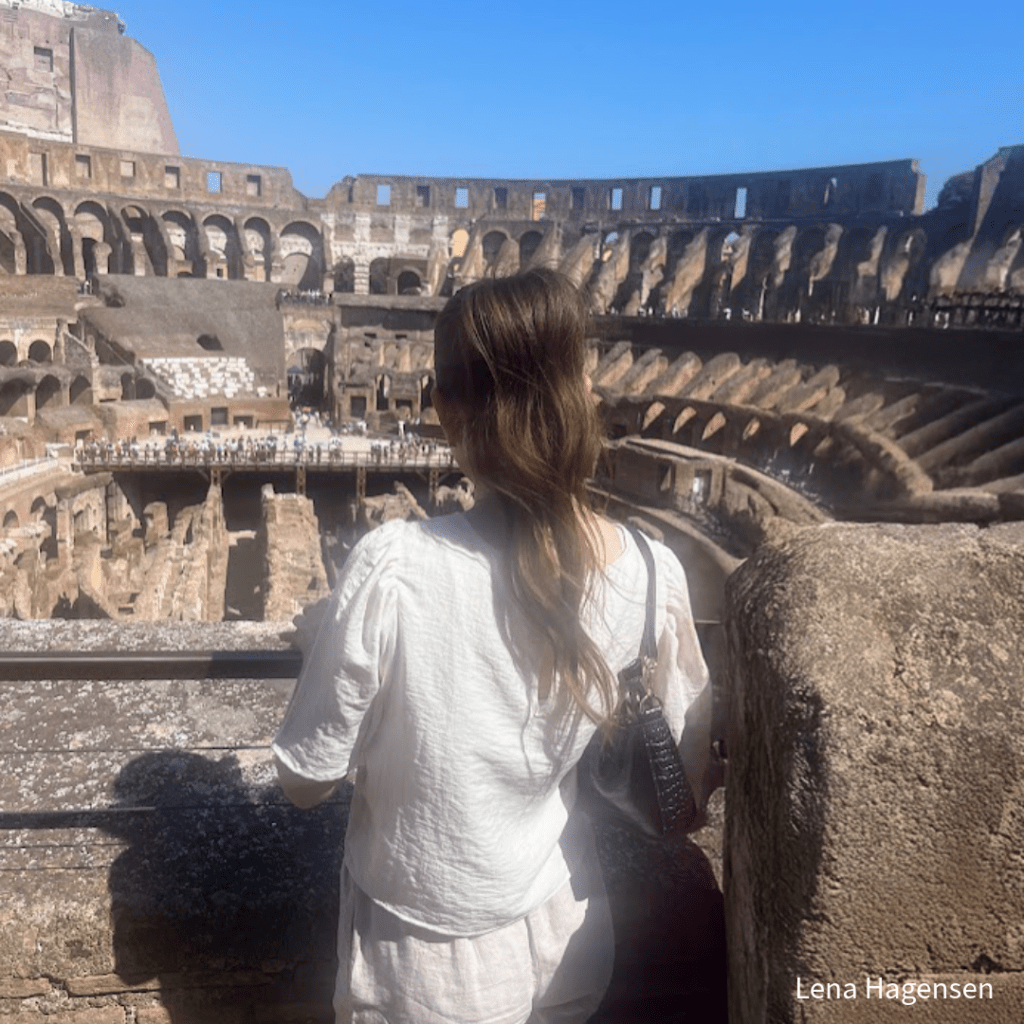
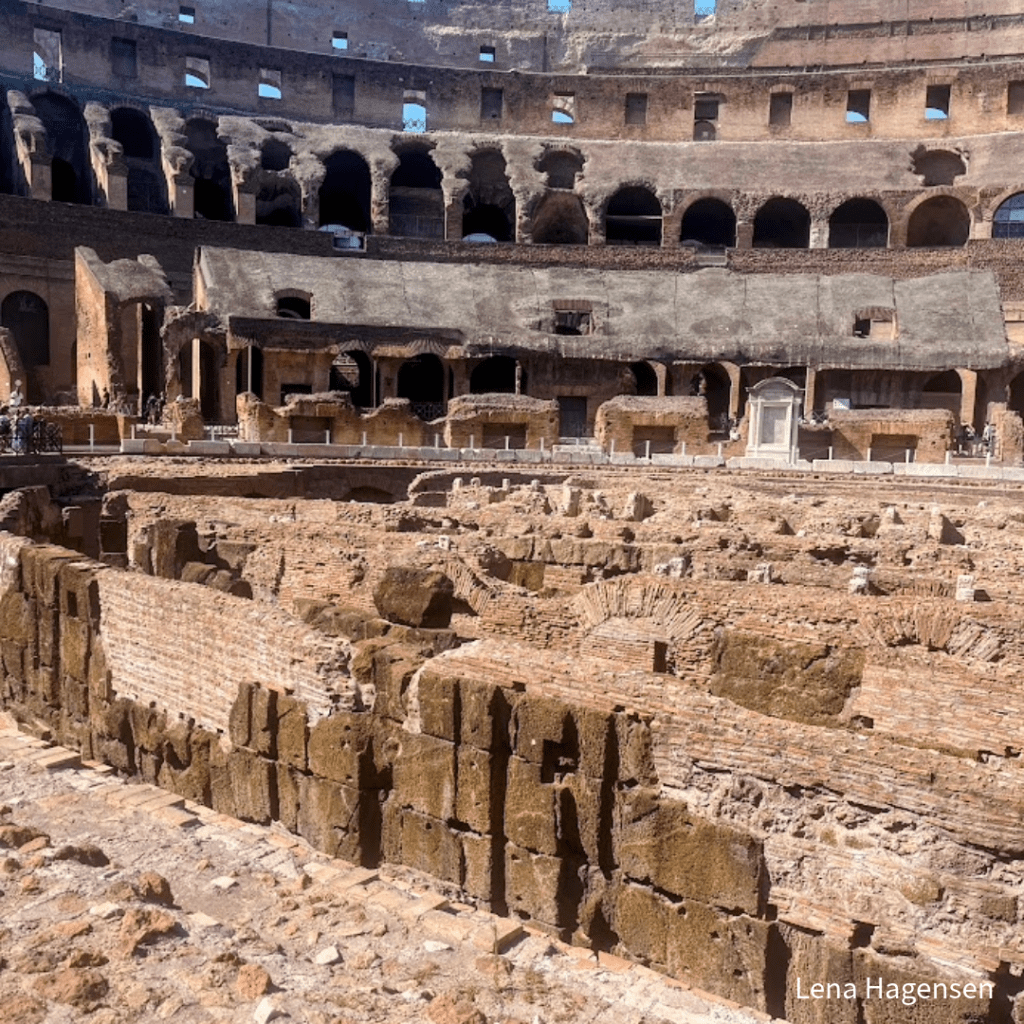
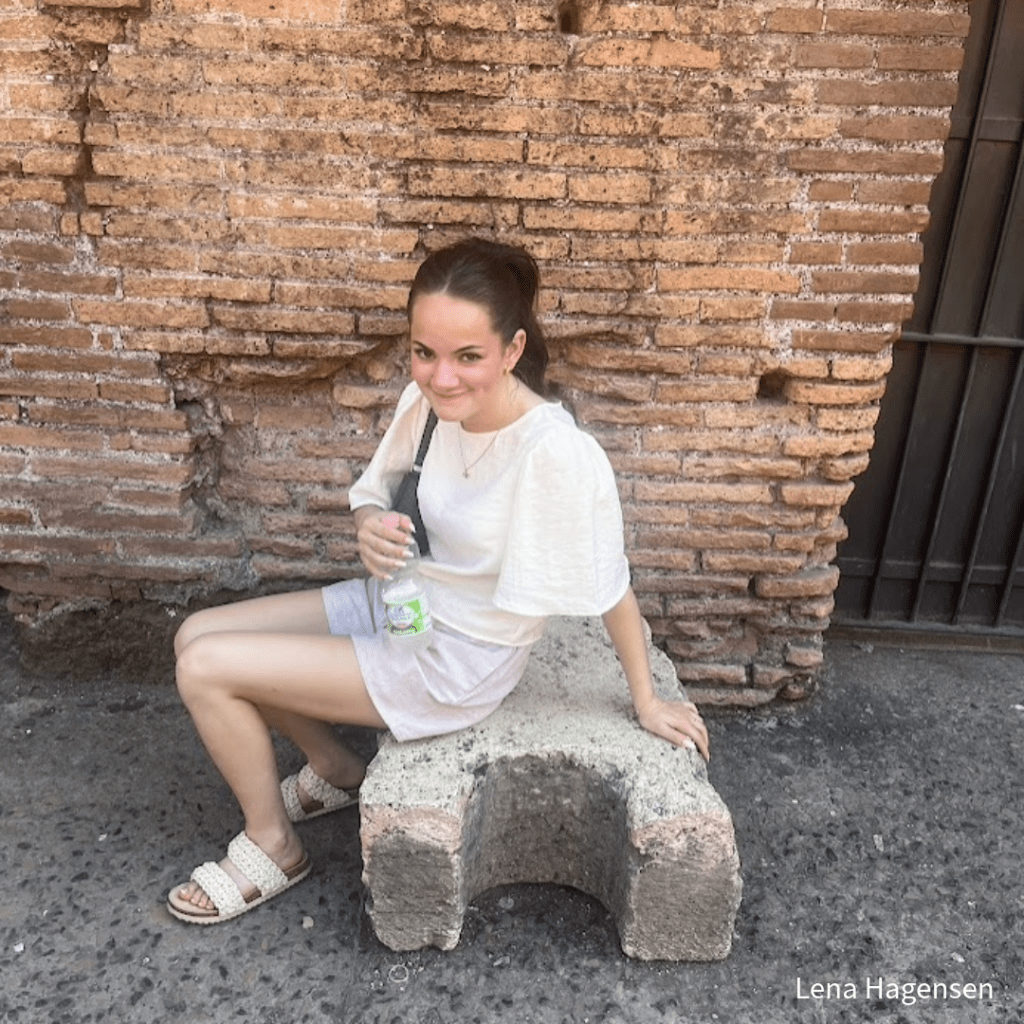
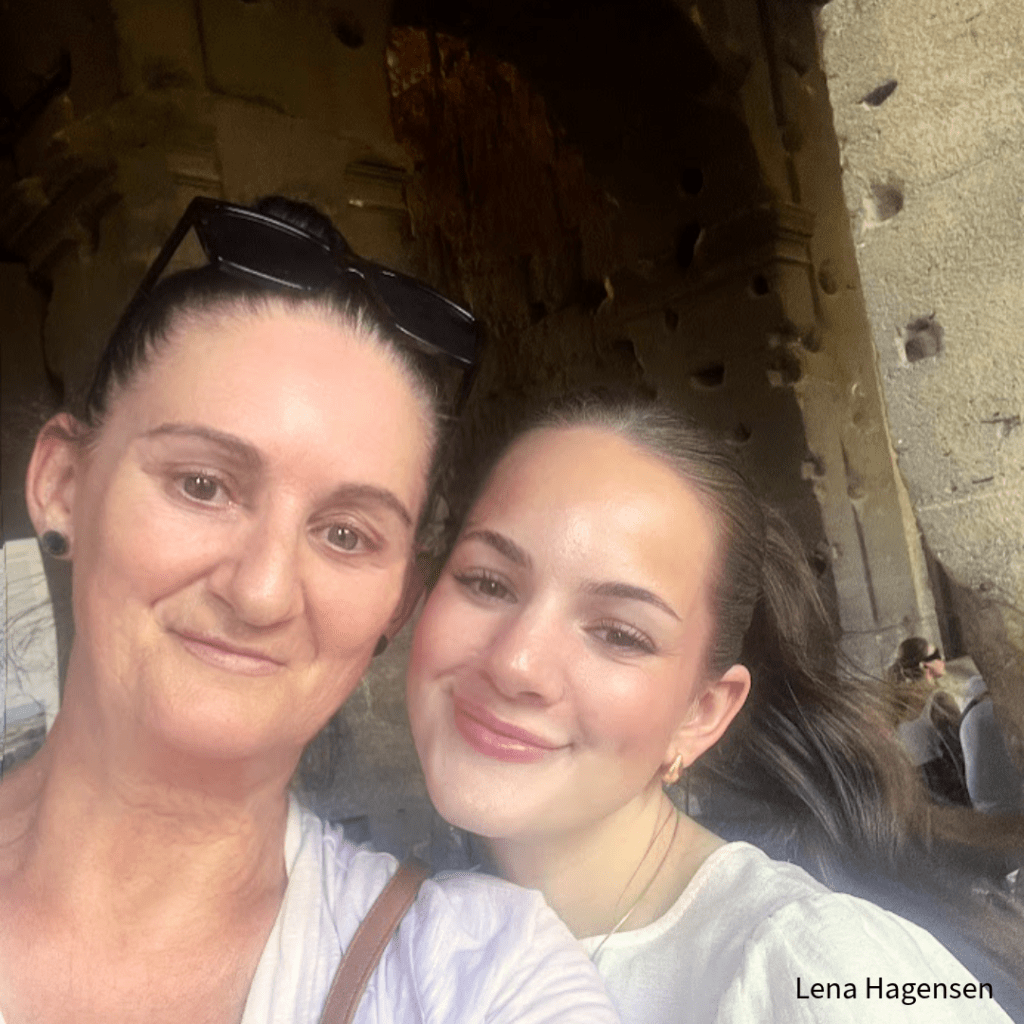
It was my daughter’s first time stepping inside.
Watching her take it all in—the size, the silence, the stories in the stones—was like seeing it for the first time all over again. It reminded me of why I keep coming back: not just to remember the past, but to share it.
Time Changes Everything
It’s strange to think what we humans have considered entertainment over the centuries. Today we take photos with our phones and admire the view. Back then, people cheered as men fought for survival. It makes me wonder: what will future generations think of our definition of a good show?
From stone of spectacle to stone of prayer
The last recorded games in the Colosseum took place around 523 AD. After that, the amphitheatre fell into disuse. The fall of the Roman Empire, a series of earthquakes, and centuries of change turned it from a place of noise and power to a quiet shell of its former glory. Much of the marble that once adorned its façades was removed and used to build St. Peter’s Basilica—Rome’s new centre of spiritual power.
There’s something strangely poetic about that: a structure once devoted to death and spectacle now lives on in a space meant for prayer and reflection.
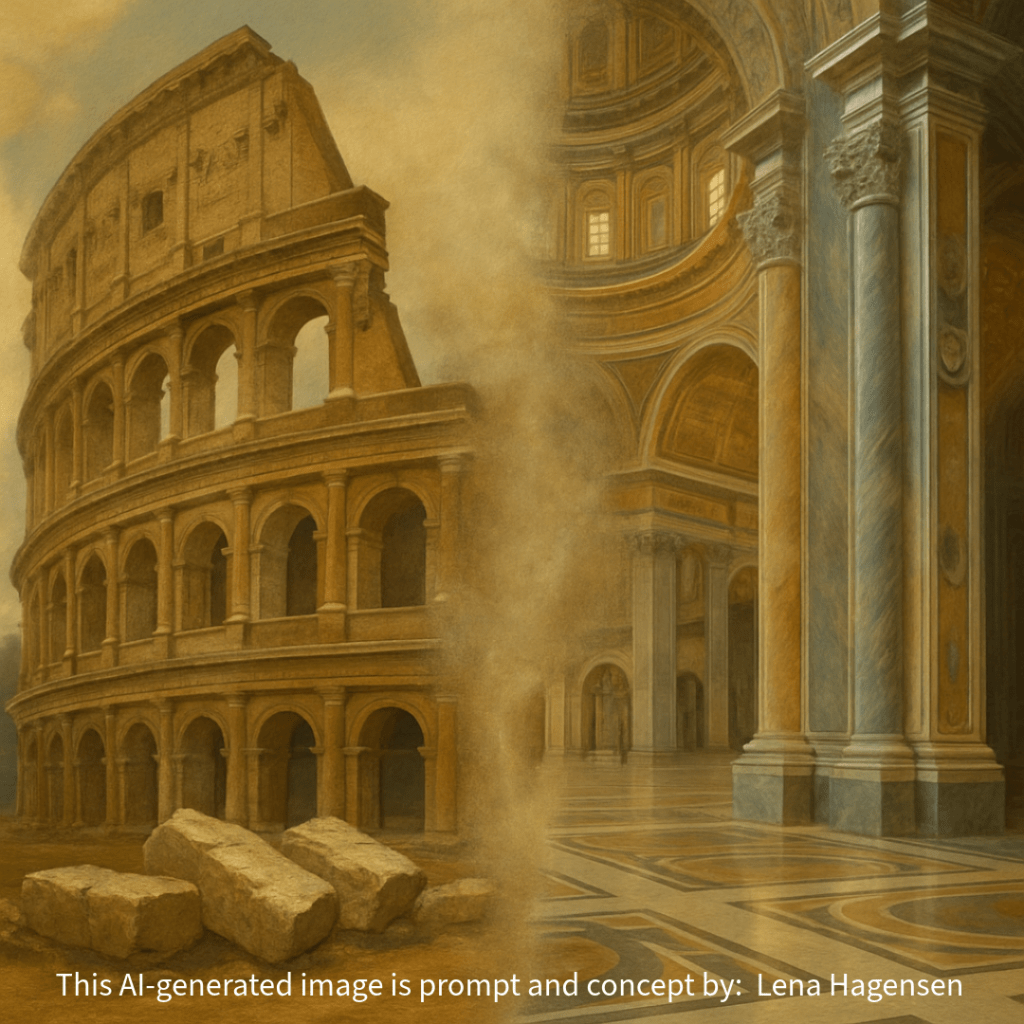
Prompt and concept by me.
Travel Tips for Your Own Visit
If you plan to visit the Colosseum, I recommend booking tickets in advance—preferably as a combined ticket with the Roman Forum and Palatine Hill. Go early in the day to enjoy a quieter, more contemplative atmosphere. Bring good walking shoes, a bottle of water, and an open heart.
🧱 Quick Facts: The Colosseum
- 📍 Location: Rome, Italy
- 🕰 Built: 72–80 AD (under Emperors Vespasian and Titus)
- 👥 Capacity: Estimated 50,000–80,000 spectators
- 🎭 Purpose: Gladiator games, animal hunts, public executions
- 🧱 Structure: Stone and concrete, elliptical shape
- 🏛 Also known as: The Flavian Amphitheatre
- 🤴 Notable fact: Emperor Commodus fought as a gladiator
- 🧱 Afterlife: Marble was reused in the construction of St. Peter’s Basilica
Ticket to Colloseum
There are different ticket types for entering the Colosseum.
To get the most out of your visit, I recommend purchasing tickets that include access to the underground level of the Colosseum.
That’s where the gladiators, slaves, and animals once waited before entering the arena.
This level is not included in the standard ticket.
You can book these tickets easily through my affiliate link – thank you for supporting my work!
Admire the beauty of ancient Rome on our guided tour of the Colosseum’s dungeons, underground, and arena – with tickets included.
Dive into local history as you explore Palatine Hill and the Roman Forum.
What Remains With Us
The Colosseum is not just stone and history. It’s a reminder of how complicated we are—capable of creating both awe-inspiring beauty and terrifying brutality. For me, it’s a place that never stops stirring something inside. And maybe that’s what travel is really about: standing in places we don’t fully understand, and yet feeling like we belong.
With a glimpse of bliss in our gaze.
Arrivederci
 ReiseMinner
Legg igjen en kommentar